

Wagner, R. D; Braun, T. L; Zhu, H; Winocour, S.
Journal of Plastic, Reconstructive & Aesthetic Surgery, 2019-07-01, Volumen 72, Número 7, Páginas 1051-1059
 The use of implants for breast reconstruction began over four decades ago, with implants initially placed in the prepectoral space. Concerns arose regarding the high incidence of capsular contracture and complication rates. With the introduction of acellular dermal matrix (ADM), plastic surgeons are again considering the advantages of prepectoral implant placement. A systematic review was conducted to examine complication profiles in prepectoral breast reconstruction alone versus prepectoral with ADM or mesh.
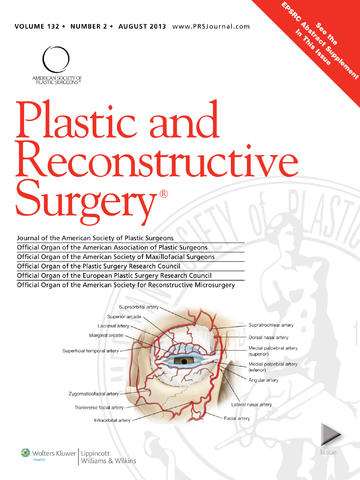 As the United States continues to be more ethnically and racially diverse, it is important for the rhinoplasty surgeon to have an appreciation and understanding of nasal variations that exist to plan for and execute ethnically congruent results. The nasal analysis is a critical component of the patient evaluation, which has been used as a tool by surgeons to identify deviations from anatomical norms or canons. In this article, the authors describe common nasal anatomical variations that exist between ethnic groups as a guide for nasal analysis. Understanding these variations will facilitate and help define important cultural aesthetics, which can be used to plan for rhinoplasties in a diverse patient population.
 Burns are a significant cause of trauma, and over the years, the focus of patient care has shifted from just survival to facilitation of improved functional outcomes. Typically, burn treatment, especially in the case of extensive burn injuries, involves surgical excision of injured skin and reconstruction of the burn injury with the aid of skin substitutes. Conventional skin substitutes do not contain all skin cell types and do not facilitate recapitulation of native skin physiology. Three-dimensional (3D) bioprinting for reconstruction of burn injuries involves layer-by-layer deposition of cells along with scaffolding materials over the injured areas. Skin bioprinting can be done either in situ or in vitro.
 Recently, many studies have demonstrated pleotropic effects of vitamin D, including immune modulation and cardiovascular system activity. Sufficient vitamin D concentrations and supplementation of vitamin D may be of benefit in burn-injured patients. Low 25(OH)D has been observed in nearly all pediatric and most adult burn patients.








 Sitio web publicado el
Los lectores comentan