

Rohrich, R; Sinno, S; Vaca, E.
Plastic and Reconstructive Surgery – Global Open: June 2019 – Volume 7 – Issue 6 – p e2270
 The facelift has significantly evolved over the past several decades. What was once considered a skin only operation is now a sophisticated, elegant procedure that requires meticulous preoperative analysis, understanding of underlying anatomically based aging changes, and extreme attention to detail.
It is not surprising that given these advances that facial rejuvenation surgery is still a very common procedure with a high degree of patient satisfaction despite the increase in nonsurgical facial aging treatments.
 Burns are a major health problem worldwide. In some countries, they are the fourth leading cause of death in trauma patients. Every year, more than 200,000 deaths occur because of diverse types of burns, and the majority of these deaths occur in low-income countries. The incidence of burn mortality depends on both patient factors (age, gender, and comorbidities) and burn factors (depth and total burn surface area (TBSA)). Mortality prediction for burn patients is important not only to determine the prognosis of individual patients but to assess the performance of the burn institute and the quality of the health care the patients receive. Many mortality or survival prediction models have been developed, modified, and validated. The abbreviated burn scoring index (ABSI) is one of the most commonly used scores for assessing patients’ mortality. It was reviewed, modified, and validated in this study.
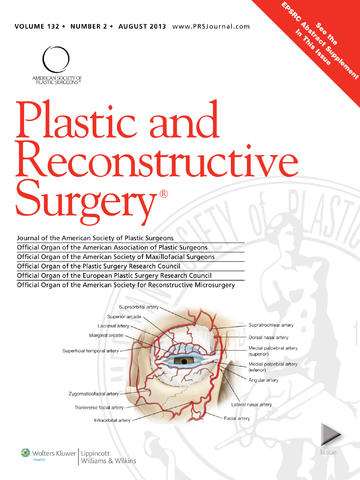 As the United States continues to be more ethnically and racially diverse, it is important for the rhinoplasty surgeon to have an appreciation and understanding of nasal variations that exist to plan for and execute ethnically congruent results. The nasal analysis is a critical component of the patient evaluation, which has been used as a tool by surgeons to identify deviations from anatomical norms or canons. In this article, the authors describe common nasal anatomical variations that exist between ethnic groups as a guide for nasal analysis. Understanding these variations will facilitate and help define important cultural aesthetics, which can be used to plan for rhinoplasties in a diverse patient population.
 Burns are a significant cause of trauma, and over the years, the focus of patient care has shifted from just survival to facilitation of improved functional outcomes. Typically, burn treatment, especially in the case of extensive burn injuries, involves surgical excision of injured skin and reconstruction of the burn injury with the aid of skin substitutes. Conventional skin substitutes do not contain all skin cell types and do not facilitate recapitulation of native skin physiology. Three-dimensional (3D) bioprinting for reconstruction of burn injuries involves layer-by-layer deposition of cells along with scaffolding materials over the injured areas. Skin bioprinting can be done either in situ or in vitro.









 Sitio web publicado el
Los lectores comentan