

Singh, M; Nuutila, K; Collins, K. C; Huang, A.
Burns, 2017-09-01, Volúmen 43, Número 6, Páginas 1149-1154
 Skin grafting is the current standard care in the treatment of full thickness burns. It was first described around 1500 BC but the vast majority of advancements have been achieved over the past 200 years.
An extensive literature review was conducted on Pubmed, Medline and Google Scholar researching the evolution of skin grafting techniques. The authors concentrated on the major landmarks of skin grafting and also provide an overview of ongoing research efforts in this field.
 Polyneuropathy is a debilitating condition which may be associated with large burns. The aim of this integrative review is to identify factors that contribute to the development of critical care polyneuropathy in patients admitted to an intensive care unit with a severe burn injury. PubMed, Scopus, CINHAL and EMBASE were searched up until July 2016. Studies/case reports focusing on critical care polyneuropathy for burn injured patients were included.
 El cáncer de piel afecta con frecuencia la región facial por su alta exposición a la radiación ultravioleta. La mejilla es un sitio frecuente y como consecuencia de la exéresis, quedan amplios defectos que requieren de técnicas reconstructivas. En el presente estudio se realizó un estudio prospectivo en 27 pacientes atendidas en el Instituto Nacional de Oncología y Radiobiología desde julio de 2013 hasta julio de 2015.
 Intense pulsed light (IPL), also known as pulsed light and broad band light, is a nonlaser light source used to treat a variety of vascular and pigmented lesions, photo damage, active acne, and unwanted hair. Current IPL systems are much improved from older-generation devices with better calibration, integrated cooling, and improved tuning. These devices are extremely popular because of their versatility and are often the first devices recommended and purchased in many offices.
 Techniques for the administration of injectable fillers and neuromodulators for facial aesthetic rejuvenation and enhancement continue to evolve. As the number of physicians with limited experience in providing aesthetic treatments expands, the need for guidance and training from more experienced injectors has become apparent. The use of a slow, careful, and methodical injection technique is imperative in all treatment settings and for all facial areas. Constant attention to local anatomy, particularly arteries, veins, and nerve bundles, is critical for minimizing complications. This first article of a three-part series addresses techniques and recommendations for aesthetic treatment of the upper face.







 Sitio web publicado el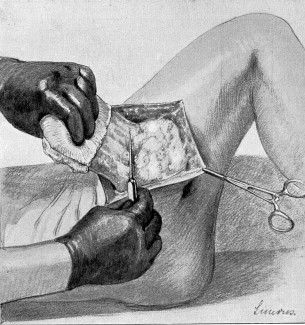
Los lectores comentan