

Delay, E; Guerid, S; Meruta, A. C.
Clinics in Plastic Surgery, 2018-01-01, Volumen 45, Número 1, Páginas 101-110
 The treatment of sequelae after conservative breast cancer treatment can be a challenge. Lipomodeling, although controversial in the beginning, is a safe technique that can help in the treatment of these deformities, without an important impact on the imaging surveillance. Depending on the severity of the deformity, one or several sessions of fat transfer can be required.
 increasing. The number of surgical procedures performed in the United States continues to rise, and surgical patients are initially seen with increasingly complex comorbidities. It is estimated that approximately half of SSIs are deemed preventable using evidence-based strategies.
 Xeroform ® is a petrolatum-based fine mesh gauze containing 3% bismuth tribromophenate. Bismuth, similar to other metals, has antimicrobial properties. Xeroform ® has been used for decades in burn and plastic surgery as a donor site dressing and as a covering for wounds or partial thickness burns. Despite this, the antimicrobial spectrum of Xeroform ® remains largely unknown. We examined the in-vitro efficacy of Xeroform ® against common burn pathogens using zone-of-inhibition methodology in a commercial research facility.
 Polyneuropathy is a debilitating condition which may be associated with large burns. The aim of this integrative review is to identify factors that contribute to the development of critical care polyneuropathy in patients admitted to an intensive care unit with a severe burn injury. PubMed, Scopus, CINHAL and EMBASE were searched up until July 2016. Studies/case reports focusing on critical care polyneuropathy for burn injured patients were included.
 El cáncer de piel afecta con frecuencia la región facial por su alta exposición a la radiación ultravioleta. La mejilla es un sitio frecuente y como consecuencia de la exéresis, quedan amplios defectos que requieren de técnicas reconstructivas. En el presente estudio se realizó un estudio prospectivo en 27 pacientes atendidas en el Instituto Nacional de Oncología y Radiobiología desde julio de 2013 hasta julio de 2015.








 Sitio web publicado el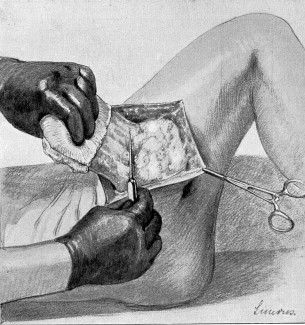
Los lectores comentan