

Yamauchi, P. S.
Clin Cosmet Investig Dermatol. 2014; 7: 261–266
 A plethora of soft tissue fillers have been developed within the past decade to correct the cutaneous changes that occur with photoaging. Such fillers, whether nonpermanent, semipermanent, or permanent, are widely used to fill undesired facial rhytides. In addition, fillers are employed to correct atrophy of the face as well as other parts of the body such as the dorsum of the hands through volumization and contouring.This review article focuses on the permanent filler, Aquamid, which is composed of polyacrylamide hydrogel.
 Made by bees from the nectar of flowers, used since ancient times to treat wounds and burns, honey has lately acquired a growing interest from the international scientific community and has been the subject of many specialized studies and communications. This article highlights the up-to-date knowledge on qualities, properties and mode of appliance of honey in the treatment of wounds of various etiologies, particularly burns, through an extensive retrospective analysis of data from the literature.
 Adipose-derived stem cells (ASCs) are mesenchymal stem cells (MSCs) that are obtained from abundant adipose tissue, adherent on plastic culture flasks, can be expanded in vitro, and have the capacity to differentiate into multiple cell lineages. Unlike bone marrow-derived MSCs, ASCs can be obtained from abundant adipose tissue by a minimally invasive procedure, which results in a high number of cells. Therefore, ASCs are promising for regenerating tissues and organs damaged by injury and diseases. This article reviews the implications of ASCs in tissue regeneration.
 El objetivo de la presente revisión sistemática es determinar si los lipoinjertos enriquecidos con células madre derivadas del tejido adiposo son superiores a los injertos de tejido graso convencionales en el tratamiento de la lipoatrofia facial.
 miento de lesiones con pérdida de tejido cutáneo ha mejorado notablemente con el advenimiento de la bioingeniería tisular. Una alternativa en desarrollo es la utilización de sustitutos dérmicos combinados con células troncales derivadas del tejido adiposo autólogo. Estudios previos muestran que con esta técnica es posible optimizar la angiogénesis y la síntesis de colágeno, sin embargo potenciar la epitelización es un tema pendiente por resolver. En el presente estudio se evalúa la progresión y diferenciación epitelial en un período de tiempo prologando.
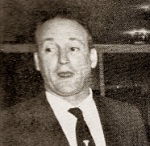 El profesor Dr. Orlando de Jesús Lescano Garaizar nació el 6 de septiembre de 1913 en el taller de platería de su padre, en la Habana Vieja. El padre estaba gravemente enfermo de tuberculosis, pero aún así la situación económica de la casa era holgada.




 Sitio web publicado el
Los lectores comentan