

Díaz Águila, H.
Manual de procedimientos invasivos en Medicina Intensiva
Manual de procedimientos invasivos en Medicina Intensiva
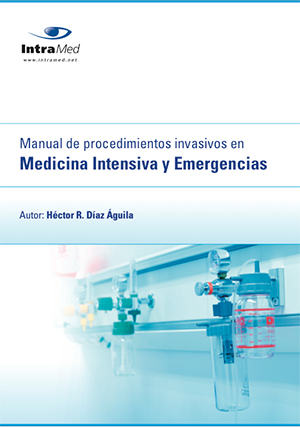 La canalización venosa central es el procedimiento invasivo más frecuentemente realizado en las Unidades de Cuidados Intensivos; solamente en los Estados Unidos de Norteamérica se realizan cada año más de 5 millones de inserciones venosas profundas. Prácticamente se han utilizado casi todas las venas del organismo para la canalización de la vena cava. En el presente capítulo se describen las principales vías de acceso para la cateterización venosa incluyendo la disección venosa.
Para acceder al artículo, regístrese en Intramed
 Durante las últimas décadas ha habido en todo el mundo un enorme aumento de las tasas de infección por patógenos resistentes a múltiples fármacos, un reconocido problema de crisis de la salud pública. En este estudio se hace una revisión sobre el tema.
 Various techniques are used in rhinoplasty. These techniques can be classified under transcolumellar approaches and endonasal procedures. Open rhinoplasty without transcolumellar incision (ORWTI) procedure can be described as a combination of these two techniques.
 Injuries by high voltage electrocution represent rare and very complex accidents. In order to provide support to surgical therapy, to limit the extension of injuries or to support the natural process of tissue repair, we oriented towards the use of two growth factors, insulin and platelet-enriched plasma (PRP) administered locally, on the injury site. The therapeutic protocol was applied on three cases of electrocution with promising results in reducing the duration of surgical and pharmacological treatment and of time of hospitalization. The influence of growth factors on healing wounds, the mechanism of action and recent therapeutic applications are also discussed.
 Nipple-sparing mastectomy (NSM) has been increasingly used to treat women with breast cancer who wish to preserve the overlying breast skin, but concern remains regarding tumor recurrence. We report our experience performing NSM for breast cancer treatment and prophylaxis over a 6-year period.
 The purpose of this study was to evaluate the effect of the dissection technique on outcomes and complications after a full abdominoplasty, comparing 2 different techniques used to raise the abdominal flap: the steel scalpel and the diathermocoagulation device on coagulation mode.
 Treatment of chronic wounds using traditional surgical procedures is challenging because of the low graft take rates. This study investigated the combination approach of split-thickness autografts with harvested skin cell suspension for chronic wound treatment.




 Sitio web publicado el
Los lectores comentan